

IT Forensics
IT forensics is the broader discipline of preserving, analyzing, and presenting digital evidence from enterprise information technology environments. GDF's certified IT forensics analysts work across Windows and Linux servers, Active Directory environments, email systems, cloud platforms, and enterprise applications to produce court-admissible technical findings for attorneys and courts.
Enterprise IT Forensic Coverage
Enterprise IT environments are complex, heterogeneous, and distributed. Relevant evidence in a single matter may span workstations, servers, email platforms, cloud storage, collaboration tools, access control systems, and application databases spread across multiple physical locations, cloud regions, and organizational units. GDF's IT forensics practice is built around the operational reality of large-scale enterprise environments. For network traffic analysis that complements endpoint evidence, see our network forensics services., with the technical depth, tooling, and experience to work effectively across every major platform in enterprise use today.
Windows forensics is the core of most enterprise IT forensic engagements. GDF's analysts perform artifact-level examination of Windows endpoints and servers, covering:
- Registry forensics: NTUSER.DAT, SYSTEM, SOFTWARE, SECURITY, and SAM hive analysis for user activity, program execution history, USB device connections, mapped network drives, and persistence mechanisms
- Event log examination: Security, System, and Application event logs; PowerShell operational logs; WMI activity logs; Task Scheduler logs; and application-specific event sources, examined for logon events, privilege use, process creation, account management, and security policy changes
- Prefetch and execution artifacts: Windows Prefetch files, ShimCache (AppCompatCache), Amcache.hve, and BAM/DAM entries documenting program execution history and last run times
- Shell artifact analysis: LNK files, Jump Lists, and ShellBags documenting recently accessed files, folders, and removable media, including items accessed after deletion
- Master File Table and journal analysis: NTFS MFT examination for file metadata, creation and modification timestamps, file system journal ($LogFile, $UsnJrnl) for file operation history including deleted file records
- Memory artifact recovery: hibernation files (hiberfil.sys) and page files (pagefile.sys) examined for residual process memory, network connections, encryption keys, and user activity not recorded in persistent artifacts
Linux and Unix forensics covers server and workstation environments running Red Hat, CentOS, Ubuntu, Debian, SUSE, and other distributions. GDF examines bash history files, system log archives (/var/log), cron job configurations, SSH authorized keys, PAM authentication logs, sudo logs, user account and group files, and kernel audit logs. For Linux servers used in web hosting, database, or application roles, GDF also examines web server access and error logs, application logs, and installed software package histories.
Active Directory forensics is critical in enterprise breach matters, where attackers routinely compromise AD to achieve domain-wide access. GDF examines AD event logs for account creation and modification, group membership changes, privilege escalation, Kerberos ticket activity, LDAP queries indicating reconnaissance, and Golden/Silver Ticket attack indicators. Replication metadata in the AD database (NTDS.DIT) is examined for account history and attribute modification timestamps that survive log rotation.
Email system forensics covers Exchange Server (on-premises), Microsoft 365, Google Workspace, and legacy Lotus Notes and GroupWise environments. GDF performs forensic acquisition and examination of mailbox stores, transport logs, message tracking logs, and administrative audit logs to document sent, received, and deleted messages, forwarding rules, mailbox access by non-owners, and email delivery path reconstruction. For Microsoft 365 environments, GDF performs forensic collection using the Compliance Center and Graph API, examining Unified Audit Log records that capture user and administrator activity across the entire tenant.
Server and storage forensics covers physical and virtual servers, NAS devices, and SAN environments. GDF examines Windows Server and Linux system artifacts, application log files, backup catalogs, and storage system audit logs. For virtualization platforms including VMware vSphere and Microsoft Hyper-V, GDF preserves and examines virtual machine snapshots, vCenter event logs, and ESXi host logs to reconstruct activity in virtualized environments.
Database forensics addresses SQL Server, Oracle, MySQL, PostgreSQL, and MongoDB installations where database records are material to the matter. GDF examines database transaction logs for data modification history, access logs for query activity, backup catalogs to establish what data was present at specific points in time, and replication logs where the data flow between database instances is relevant.
Application log analysis covers enterprise applications including ERP systems (SAP, Oracle E-Business Suite), CRM platforms (Salesforce), document management systems, HR systems, and financial applications. Log records from these applications document user activity, data access, record modification, and administrative changes in terms that are directly meaningful to the legal questions being addressed.
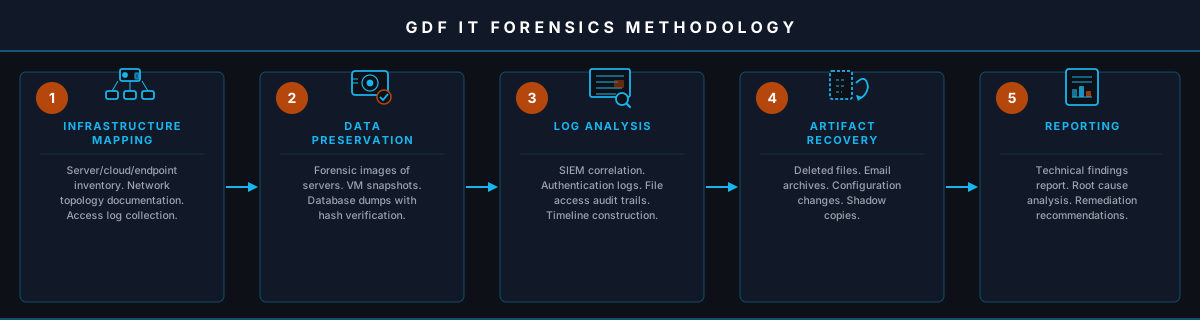
GDF's IT Forensics Methodology
GDF's IT forensics engagements follow a structured methodology built on the principle that every forensic action must be documentable, repeatable, and defensible. The methodology draws on standards established by NIST Special Publication 800-86 (Guide to Integrating Forensic Techniques into Incident Response), the Scientific Working Group on Digital Evidence (SWGDE), and ISO/IEC 27037 for digital evidence identification, collection, and preservation.
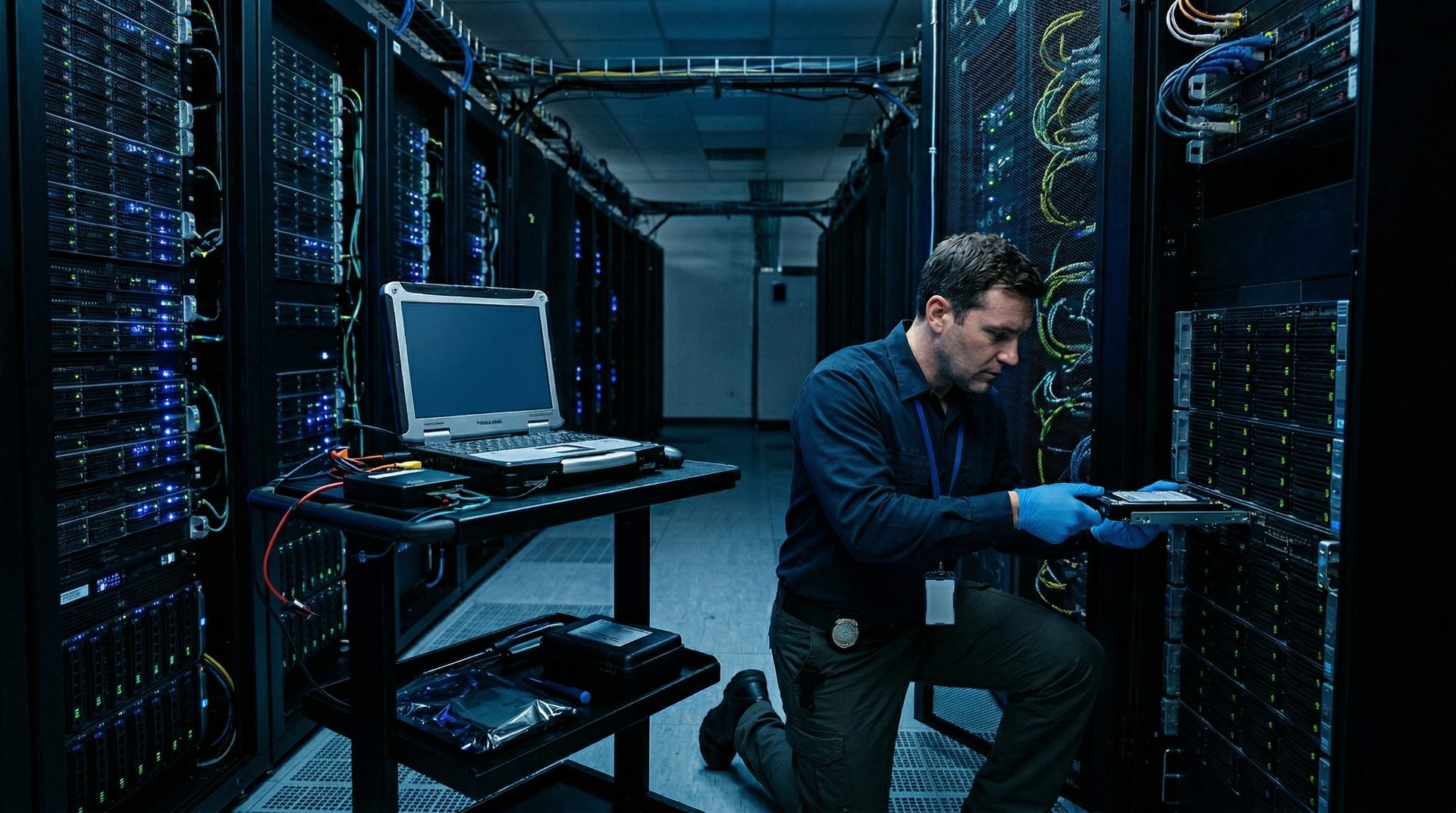
Forensic imaging is the first substantive step for physical media, performed using write-blocked acquisition with hardware write blockers (Tableau T35u, WiebeTech Forensic UltraDock) or software write protection verified by the acquisition tool. GDF creates forensic images in industry-standard formats (E01/Ex01 or DD raw image) and verifies image integrity by computing and recording MD5 and SHA-256 hash values of both the source media and the resulting image. For live systems where shutdown would destroy volatile evidence or business operations require continuity, GDF performs live forensic acquisition of running memory (RAM), active network connections, and running processes before proceeding to disk acquisition. Chain-of-custody documentation accompanies every piece of evidence from first contact through examination to production or secure return.
For cloud environments, forensic acquisition uses platform-native collection methods: Microsoft 365 Content Search and eDiscovery collections, AWS CloudTrail export and S3 Object Inventory, Azure Activity Log export and Azure Monitor data collection, and Google Workspace Vault exports. GDF documents the collection methodology, the API calls and tool versions used, and the resulting data hashes to establish a defensible chain of custody for cloud-sourced evidence.
The examination phase is artifact-driven: GDF's analysts identify and prioritize the artifact categories most likely to answer the forensic questions posed by the matter, apply targeted examination to those artifacts, and document every finding with the specific artifact, file path or registry key, timestamp, and analyst methodology note. Anti-forensic indicators receive specific attention: file system timestamp manipulation (timestomping), Windows event log clearing, bash history deletion, secure deletion tool usage, and log file modification are all documented where evidence of them exists.
Collaboration with legal teams is a structured part of GDF's engagement process. Before examination begins, GDF works with counsel to define the scope of relevant artifacts in terms of the legal questions at issue, ensuring that the examination is targeted at what matters and that privilege considerations are properly managed. During examination, GDF provides interim findings briefings so that counsel can guide scope adjustments as the evidence picture develops. Final reporting produces both a technical report suitable for expert disclosure and an executive summary suitable for client briefing and settlement discussion.
Expert witness testimony is available at all stages: deposition, Daubert hearings, and trial. GDF's analysts are experienced at explaining complex technical artifact behavior to non-technical audiences and at defending their findings and methodology against cross-examination by opposing experts.
IT Forensics Use Cases
Insider threat matters are the most common context for enterprise IT forensics engagements. When an employee is suspected of data theft, sabotage, or policy violations, IT forensics establishes what actually occurred: which files were accessed, copied, or transmitted; whether removable media or personal cloud storage accounts were used for exfiltration; what was deleted and when; and whether anti-forensic tools were used to conceal activity. GDF's examinations in insider threat matters cover the departing or terminated employee's endpoints, email accounts, file server activity logs, DLP system records, badge access logs (where corroborating evidence is needed), and any cloud sync clients installed on company devices.
Breach post-incident documentation is required for cyber insurance claims, regulatory breach notifications, and the litigation that follows significant incidents. GDF's IT forensics analysts reconstruct the attacker's activity from initial access through lateral movement to data access or exfiltration, documenting the timeline, the systems affected, and the data at risk. This documentation supports the factual record in insurance coverage disputes, satisfies regulatory documentation requirements under HIPAA, GLBA, CCPA, and state breach notification statutes, and provides the technical foundation for litigation against responsible parties.
Employment disputes frequently hinge on digital evidence. Non-compete and non-solicitation claims require proof that the former employee copied or transmitted confidential customer lists, proprietary processes, or trade secrets before departing. Wrongful termination defense may require demonstrating that performance issues were real and documented in system records. Harassment and discrimination claims may involve email, chat, or document evidence preserved in enterprise systems. GDF provides forensic examination and court-admissible findings across all of these contexts.
Fraud and financial crime support draws on GDF's ability to reconstruct financial transaction activity from accounting system logs, email evidence, document metadata, and access control records. In matters involving embezzlement, financial statement fraud, procurement fraud, and Ponzi schemes, IT forensics establishes what records were created, modified, or deleted, by whom, and when, providing the digital evidentiary foundation that financial forensic experts build on.
Criminal defense matters engaging IT forensics include cybercrime charges (unauthorized access, CFAA violations), child exploitation cases where attribution of activity to a specific user is contested, and white-collar criminal matters where business record integrity is at issue. GDF's analysts examine the same artifacts from a defense perspective, identifying alternative explanations for evidence attributed to the defendant, documenting chain-of-custody failures in government evidence handling, and providing independent technical assessment that balances the prosecution's forensic narrative.
Regulatory compliance documentation is an increasingly common driver for IT forensics engagements outside of active litigation. SEC and FINRA regulated entities, HIPAA covered entities and business associates, and PCI DSS merchants use GDF's forensic documentation services to establish baseline records of data handling practices, document the results of security incidents for regulatory submission, and provide forensic analysis supporting internal inquiries that may need to withstand regulatory scrutiny.
GDF serves clients across all 50 states and internationally, with offices in New York, Boston, Washington DC, Miami, Tampa, Los Angeles, and San Francisco. Our analysts hold CCE, EnCE, ACE, GIAC GCFE, GCFE, and ACFEI International certifications recognized by federal and state courts. Call 1-800-868-8189 to speak with a certified IT forensics analyst about your matter.
Last updated: April 14, 2026
Active Directory Forensics
GDF examines AD event logs, NTDS.DIT replication metadata, and Kerberos activity to reconstruct privilege escalation, lateral movement, and unauthorized account access in enterprise breach matters.
Microsoft 365 and Cloud
GDF collects and examines Microsoft 365 Unified Audit Logs, Exchange Online mailboxes, SharePoint and OneDrive activity, and Azure AD sign-in logs using platform-native forensic collection methods.
Insider Threat Matters
From endpoint artifacts to email and file server logs, GDF documents data theft, sabotage, and policy violations with the evidentiary rigor required for employment litigation and criminal proceedings.
Anti-Forensic Detection
GDF specifically examines evidence for log clearing, timestamp manipulation, secure deletion tool use, and other anti-forensic activity that may indicate deliberate concealment by a subject.
Request a Consultation
All consultations are strictly confidential. We'll assess your matter and recommend the right forensic scope and approach.